
This one is going to get deep. Primer before we get into it: Manga made me realize that I love stories and thematic elements that drive them. Yes, I love the specific contexts, characters, and universes that manga authors create out of seemingly nowhere, but I especially love to find meaning behind everything and the vehicles that authors use to drive their points across.
Character arcs, overarching messages, and underlying tones can all be analyzed from manga, and the messaging can be rather powerful, enough to make me change the way I think about everyday life. From the way I wake up in the morning to the way I think about the negative turns that life can take, and even extending to what I eat for lunch on a given day, digesting (no pun intended) these 5 manga series helped me alter my ways of thinking more than just slightly:
Honorable Mentions
Fire Punch – Tatsuki Fujimoto
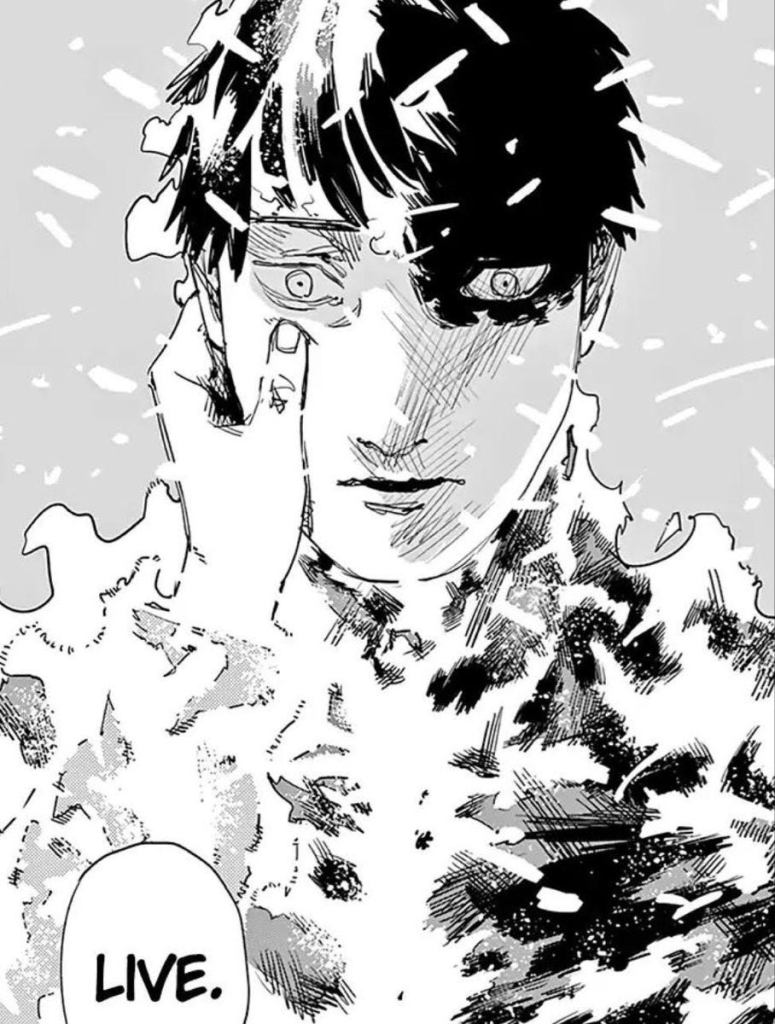
Honorable mention because this series drove me into a semi-existential crisis in the span of the 3 days that I binged this series. Very similar to another popular series**. Being one of Fujimoto’s earlier pieces, I expected some decent art and story line, with good action. The violence and action definitely delivered through some of Agni’s early fights.
What I did NOT expect was the entire world ending. While I personally am not a fan of thematic elements pointed towards the overall message of “nothing in the universe matters”, the ending did spark something in me to not take every day for granted. And everything in my life could always be worse, like, way worse.
**Evangelion put me into a hole for 3 weeks, thus it does not receive an honorable mention. It’s the one show I recommend both no one and everyone to watch at some point.
Zom 100: Bucket List of the Dead – Haro Aso
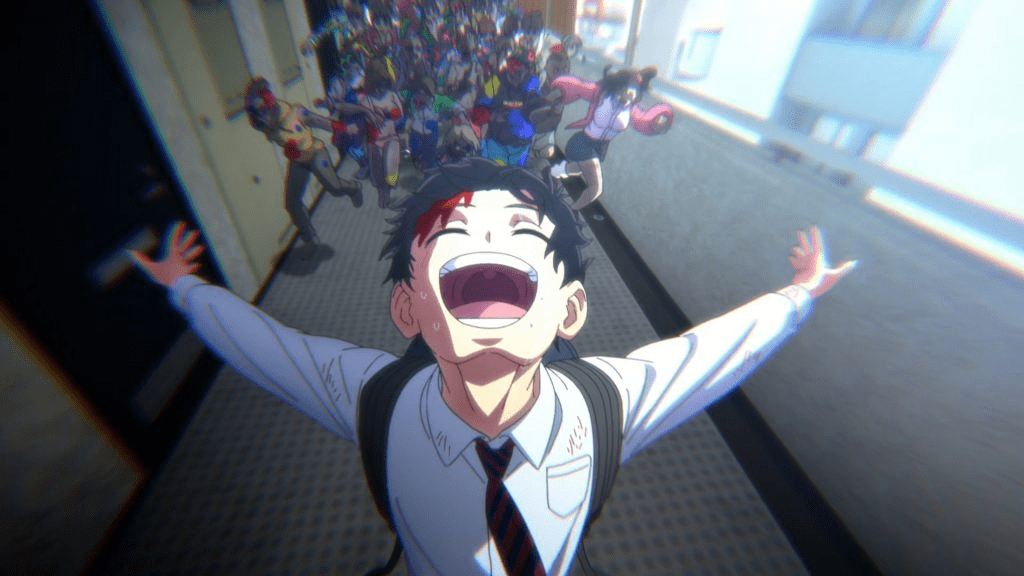
On the other side of the coin, Zom 100 receives an honorable mention for being a series that emphasized to me to never take anything for granted. Except in this one, the message is delivered in such a way that everyone does not have to die like in Fire Punch (though there is a zombie apocalypse, so pick your poison I guess).
I really appreciate the comedy, the cast of misfit characters, and the romance in spite of Akira being a completely blind idiot for most of the series up until recently. The overall plot showed me that the little things are what makes you happy in the long run and does it in a fun-loving way. And with zombies.
Now, on to the real list. These 5 series have sincerely changed my heart, mind, and soul, with just some drawings (understatement of the century) and some words:
5. Berserk – Kentaro Muira
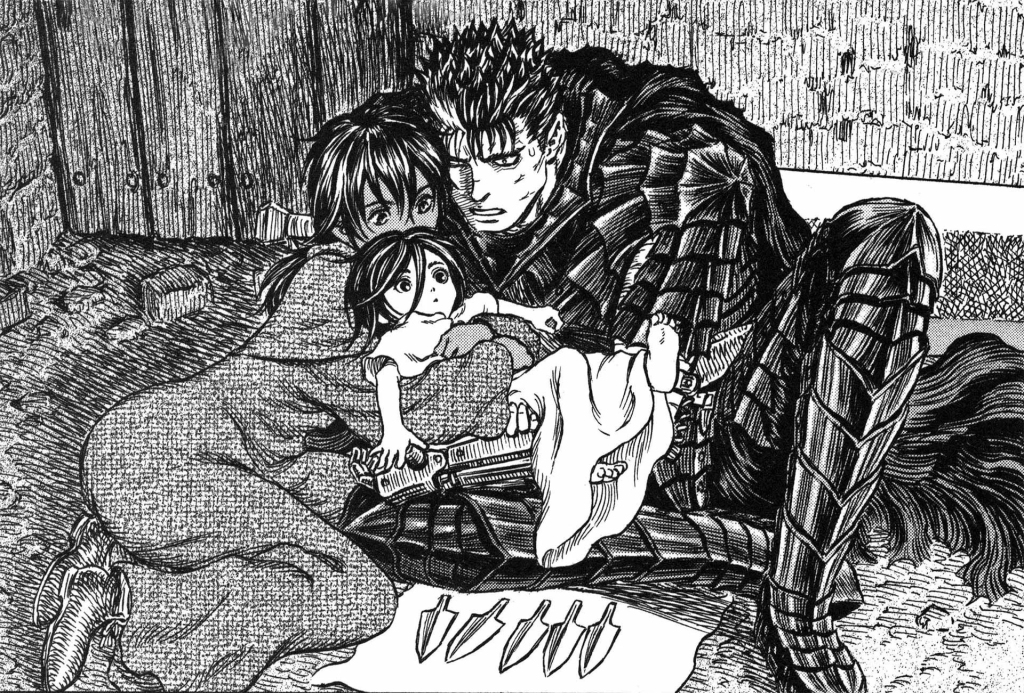
Tragedy, struggle, companions, life, death, rebirth, the whole 9. R.I.P Muira Sensei. Sincerely one of the best to ever do it.
Berserk is a masterpiece, point blank. There’s a lot of praise to go around for the art, depth, plot, and thematic elements that surround our beloved Guts as he makes his path for revenge, processes all his grief, and learns to live as he is with what he has.
A lot of this and the message driving Guts from where he was to where he is now really left an imprint on me. Guts decided for himself that tragedy was part of life and that “struggling” was the best way forward. Early on after the Golden Age arc, this remained true, but Guts was forced to shift his thinking to survive, and so did the reader. He soon found himself protecting an empty Casca and started gaining companions on his journey to help him carry his load, relying on them to make himself better.
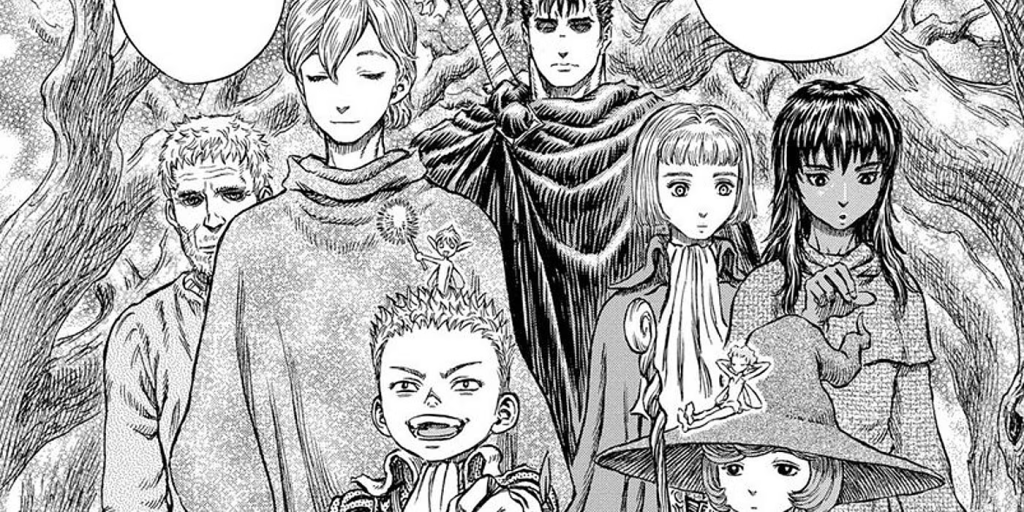
Even though it is a commonly portrayed troupe, the power of friendship and the way Miura portrays it through Guts is really unique to me, and much more impactful given the life Guts has had from birth. My boy really deserves better, and it leaves me thinking that as long as you have loved ones, you are never destined to fall, suffer, or fall into despair.
4. Frieren: Beyond Journey’s End – Kanehito Yamada
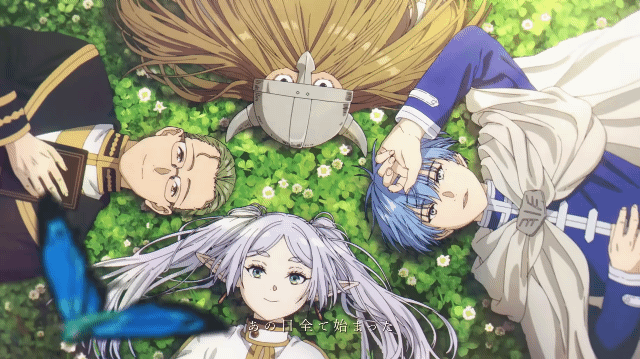
I was first exposed to Frieren via the anime (as most people probably were). The adaptation is unreal and I am really looking forward to season 2.
Frieren, with the story up until now, has already taught me several mantras that I think about pretty frequently since watching the anime.
The largest one being, obviously, that it is really easy to take time for granted. Almost too easy. Frieren having lived more than 5X longer than most of the characters she has encountered thus far really makes her inconsiderate of time due to her long lifespan. Relationships, connections, and memories all seem to fade from Frieren’s mind as she simply hunts for new magic to collect without much care in the world.
Not only is it until she is entrusted with new fledglings Fern and Stark that she begins to question her perspective on life and everything she has accomplished until now.
Yamada does a beautiful job using Stark and Fern to push Frieren to reflect more about her own life as well as her past with Himmel and co. during their journey, and it really forces the reader to think about the oh-so limited time humans have to make impacts to the world and other people’s lives.
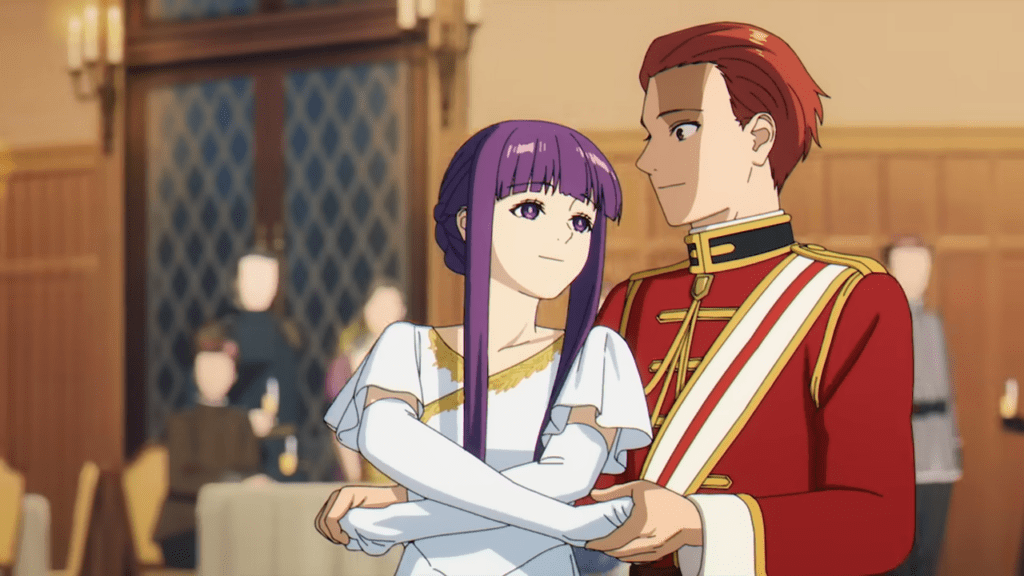
Aside from Frieren, Stark’s relationship with cowardice and bravery is a fantastic life lesson to maintain confidence in the face of adversity. Recognizing fear is not a sign of weakness. Fern, despite losing both her parents, is convinced by Frieren’s old companion Heiter to make good memories with the life she’s been given and to not throw it away, which is something everyone can take away..
Overall, a series that executes on thematic elements through simple yet heartwarming character interactions such as Frieren can make a lasting impression on just about anyone.
3. Vinland Saga – Makoto Yukimura
I have no enemies.
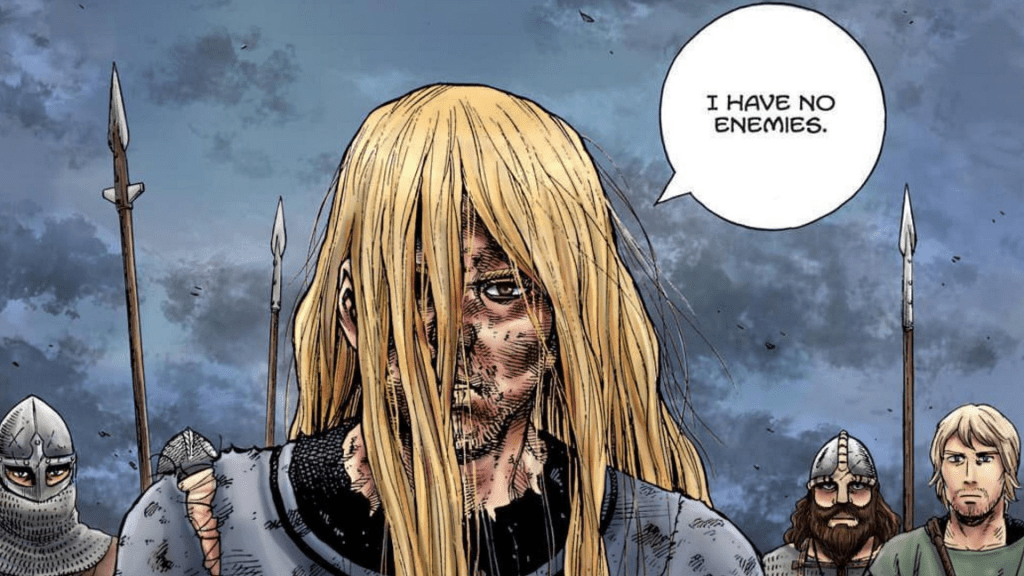
The classic one-liner that probably sticks with most people who have enjoyed Vinland Saga, especially after the release of Season 2 a couple years ago.
Outside of memes and Tik Tok edits ripping on the Farming Arc for its stark contrast against what I consider as the prologue of Vinland Saga, this series has cemented a soft place in my heart for its characters, anecdotes, and view on stoicism.
Even though Guts in my opinion had it a bit worse, I like to think Guts and Thorfinn would be the best of friends.
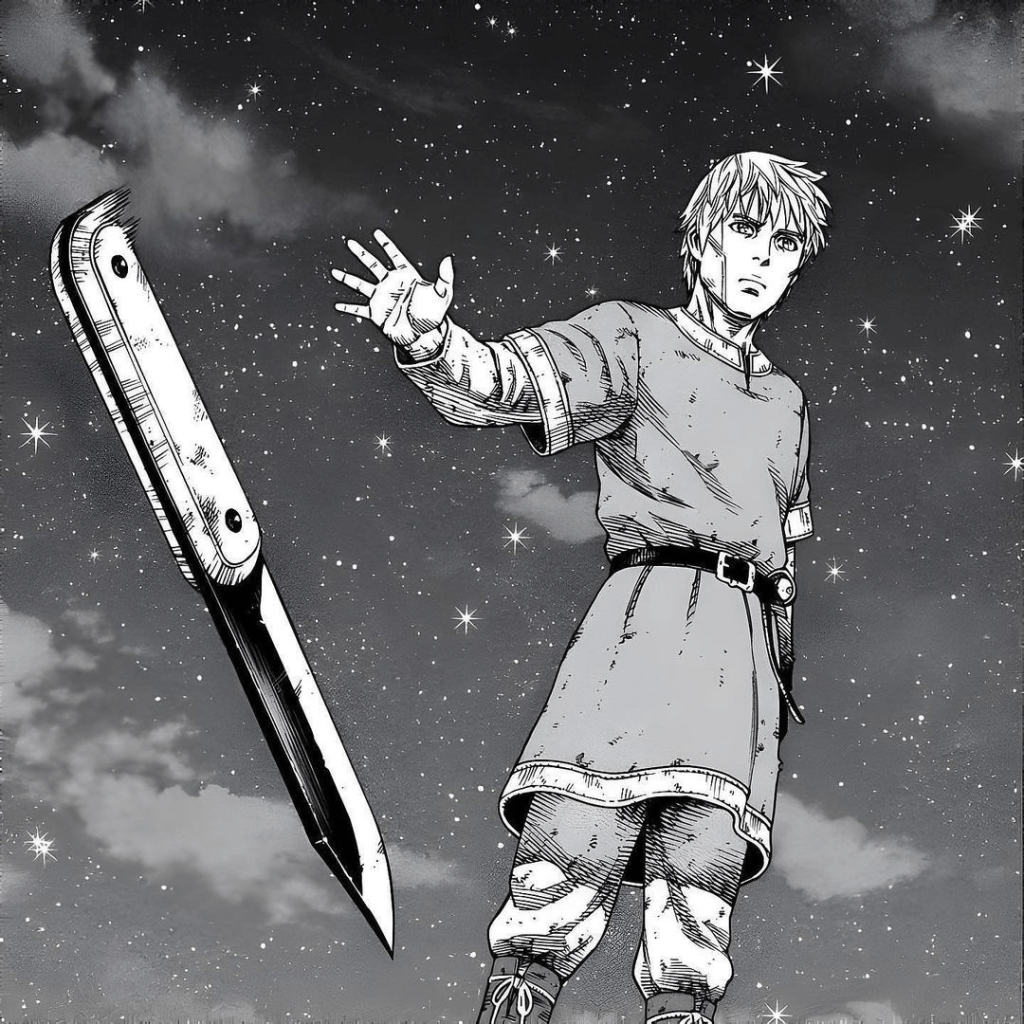
Thorfinn’s bold stance of pacifism and reformed view on revenge in a world gluttoned with violence is a refreshing take on life that most people, especially me, can take away from. The villains of the story (shoutout Thorkell and Garm) really serve as beautiful contrast and points of adversity for Thorfinn in his journey.
And not to mention Canute, who serves as an incredible foil to Thorfinn. Both aim to rid the world of war but differ vastly in the route to achieve it. Thorfinn prefers pacifism and retreating to make his own world, while Canute wants to take the world by force and through blood to achieve peace through fear. It is an interesting comparison that left me thinking about how conflict occurs in the real world.
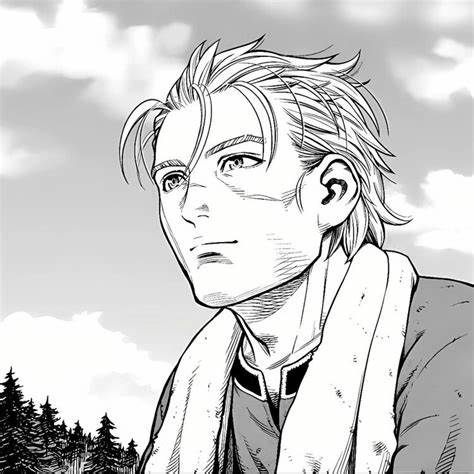
Thorfinn pacifistic ideals, morality, and the manner in which he handles grief throughout his journeys all left me to reflect on how I should approach every day with emotional intelligence and understanding of what it means to truly be free.
Praying for the best for my boy Thorfinn in his recent struggles in the manga. I highly recommend catching up if you have not done so already.
2. One Piece
What would Luffy do?
The answer is simple: eat and beat up anyone who gets in the way of doing whatever he wants to do.
On the surface, it seems like it would be hard to take away any “life lessons” from One Piece. It is largely an epic of a journey to be enjoyed by the reader/watcher. There is romanticism, adventure, and excitement that make the series a simple joy to experience.
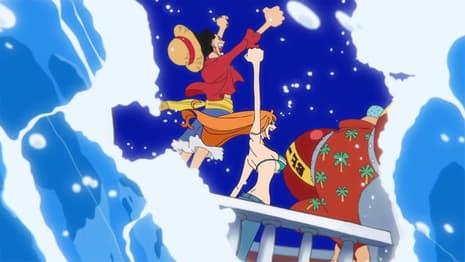
It wasn’t up until very recently that I had One Piece change the way I think (other than trying to theorize what the One Piece could be). However, a certain anime episode made me change my tune quickly.
One Piece Fan Letter. A simple filler episode directed by none other than Megumi Ishitani (see: episode 1015). This 20 minute non-canon episode details the perspective of a “fan” of the Straw Hats shortly after they reunite at Sabaody to tackle the New World together. Although it is a simple story (beautifully directed and animated), it really sums up the message that I’ve had such a hard time conveying to myself when it comes to One Piece:
That is, everyone deserves to struggle and live freely as they can in spite of everything in the world dedicated to keeping us shackled.
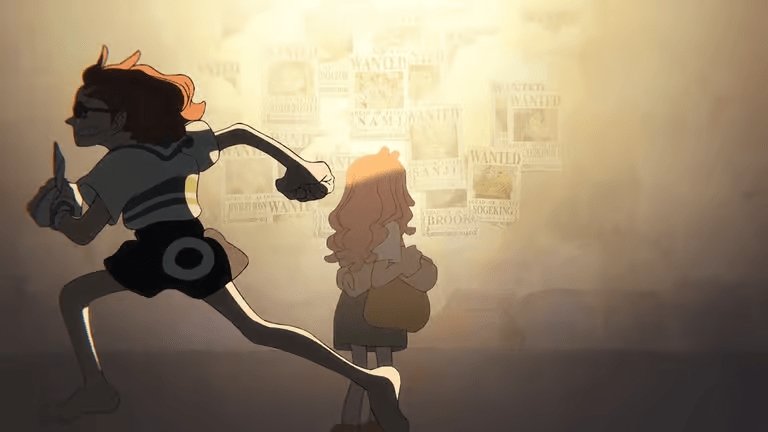
We see this exemplified as we follow a young girl (Nami twiiiiiin) attempt to deliver fan mail to the real Nami before the crew heads (sinks?) off to Fishman Island. We see her struggle and struggle and struggle to deliver her message against various obstacles including the Marines. All of it ends up for naught, but, she is able to catch a glimpse of the crew in their departing moments, making it all worth it in the end.
Whether it is a bad job, bad family, not enough money, or not enough friends, every single person deserves to at least try to live freely and do whatever they want. Free will is largely what makes humans human. And that is beautiful message to take away from this series and is only emphasized by the passion of the Straw Hats in helping Luffy to become Pirate King.
Could not recommend One Piece more to everyone and anyone, especially those looking to start getting into anime or manga.
1. Haikyu!! – Haruichi Furudate
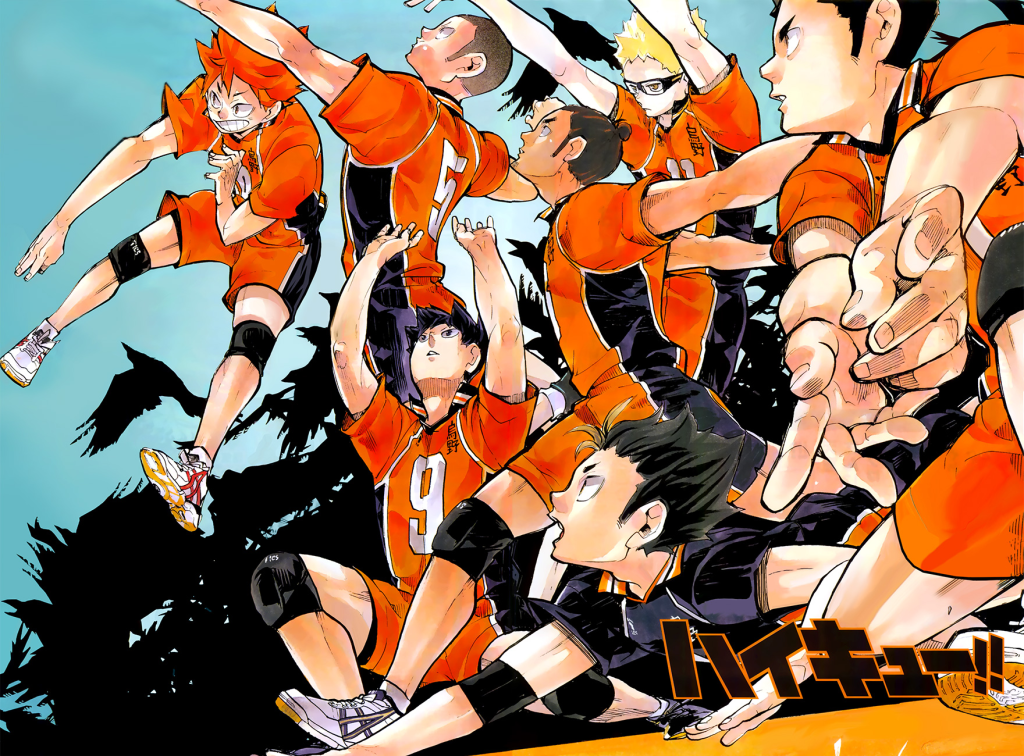
And here we are at the end, and my top choice. I cannot emphasize this enough: it is absolutely insane how high school boys playing indoor volleyball can change the way you think. This manga changed my outlook on life significantly.
I repeat that sentence back to myself and I’m just dumbstruck. But, in my opinion, that is what makes manga absolutely fascinating to me. Authors can take the most dumbed down concepts, break them down into simple, digestible components, and build them back up into a beautiful message that leaves readers to take back with them.
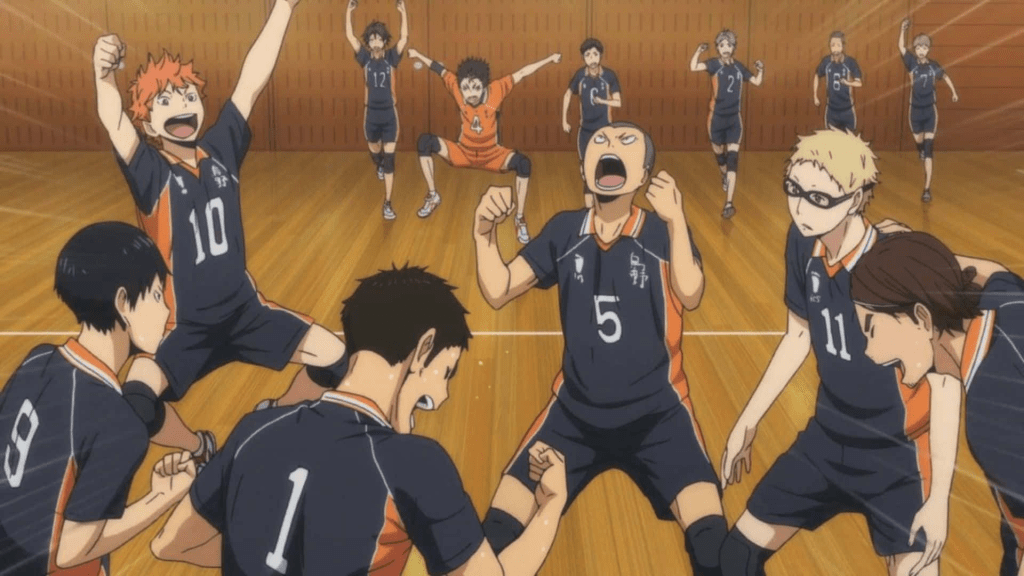
And that is exactly what Furudate does with Haikyu!!.
Starting off with a simple concept: a high school boy who’s “too short” for the volleyball net putting his entire mind, body, and soul into learning how to play the sport at a high level and compete with the best in his class.
Very simple, shonen-esque. High school freshman wants to be the best at his sport. But as the plot of Haikyu!! progresses, you find more to it.
Throw together some classic rivalries, one of the greatest supporting casts in all of manga (Noya, Bokuto, and Ryu fan over here), incredible banter, complex relationships and interactions, the highest of successes, the lowest of failures, and you get Haikyu.
This story expands upon so much related to human life that reach far beyond volleyball. Determination, the hunger to succeed, the beauty of failure, process over results, health is wealth, just to name a few.
Haikyu has taught me to always seek greatness and constantly work to improve myself even if it is the smallest improvements day by day. I am honestly grateful because nothing has shown me the benefits and given me the drive to set out and do what I want more clearly than this series.
Hinata’s struggles, successes, discipline, and perspective on playing volleyball depicted throughout the series all make you strive to be a better version of yourself. Hinata is my little ball of sunshine and a great role model to learn from.
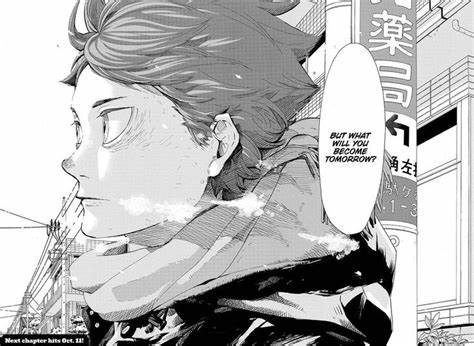
In the famous words of Fuki Hibarida, coach of the Japan National Volleyball Team:
For today, you happened to be defeated.
But what will you become tomorrow?
See you guys next time.
 20 Pages 20 Minutes